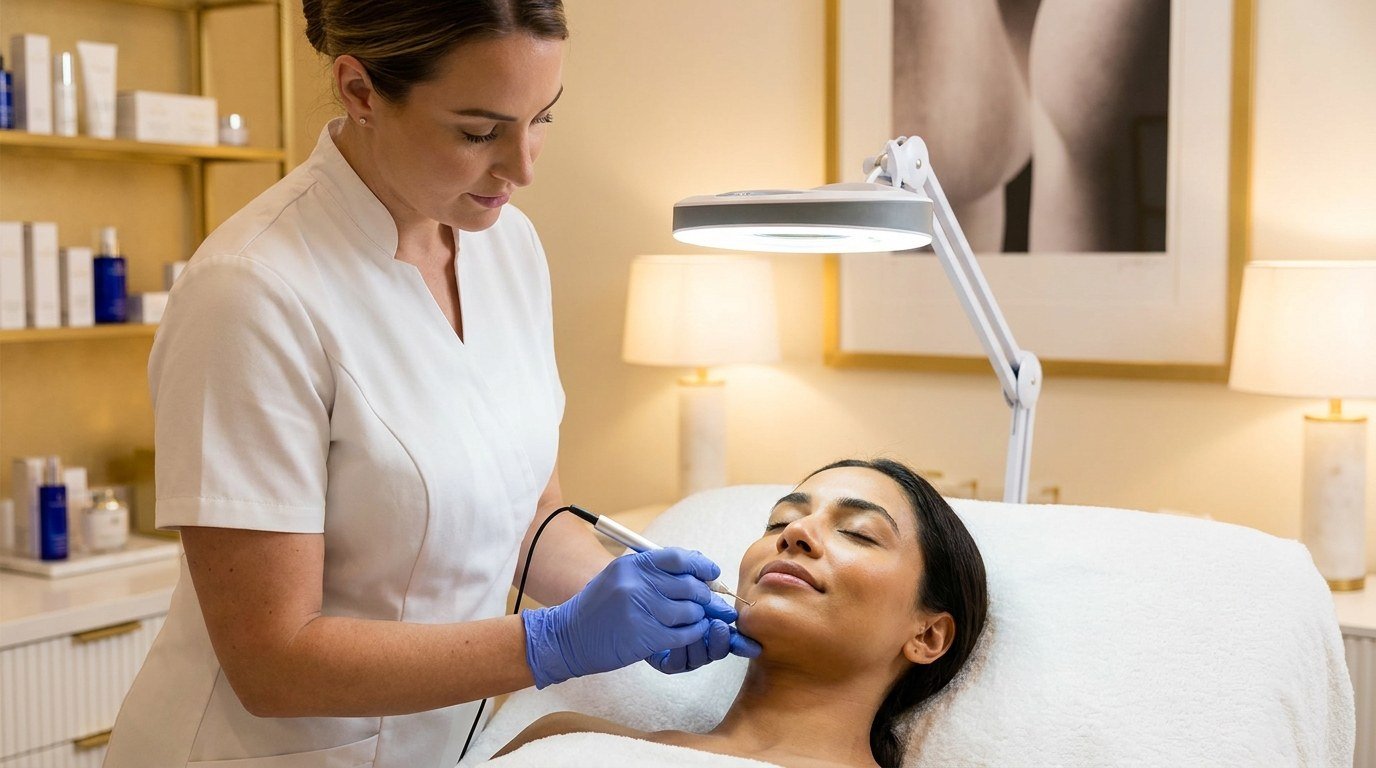
Electrolysis
The only hair removal method the FDA recognizes as 100% permanent — here's exactly how it works.
Laser hair removal gets most of the attention, but it's not actually the only — or the oldest — permanent hair removal method. Electrolysis has been in continuous use since the 1870s, when it was first developed to treat ingrown eyelashes, and it remains the only method the FDA recognizes as achieving true, 100% permanent hair removal. Here's exactly how it works.
Quick Facts
What it is: A fine probe is inserted into each individual hair follicle, delivering a small current that destroys the follicle's growth cells at the root
Two methods: Galvanic (chemical) and thermolysis (heat) — most modern studios use a blended technique for comfort and efficiency
FDA classification: Permanent hair removal — not reduction
Best for: Any hair color or texture, including gray, white, blonde, and red hair — and every skin tone
Sessions needed: Because each hair is treated individually, expect weekly or biweekly visits over several months depending on the area
Pain level: A brief pinch or warm sensation per follicle — most clients tolerate small areas like brows or chin comfortably
A licensed technician inserts an ultra-fine, sterile probe directly into a hair follicle — not into the skin itself, but down the natural channel the hair already grows through. A small electrical current then travels down the probe and disables the follicle's growth cells (called the dermal papilla and germinal matrix). There are two ways this current is delivered:
Because the current is delivered directly into the follicle rather than relying on light absorption by pigment, electrolysis works no matter what color the hair is or how dark or light the surrounding skin is.
Most clients describe it as a brief pinch, warm tingle, or tiny static shock at each follicle — uncomfortable for a fraction of a second, not painful. Sensitivity varies by area; the upper lip and chin tend to be more sensitive than eyebrows, and everyone's tolerance is a little different. Because treatment is done one follicle at a time, technicians can adjust intensity as they go, and most clients find it very manageable, especially for the smaller precision areas electrolysis is best suited for.
Yes — this is what sets it apart from every other hair removal method, including laser. Because electrolysis destroys the follicle's growth cells directly, a fully treated follicle cannot produce hair again. Laser, by comparison, achieves permanent reduction — typically 80–95% fewer hairs after a full course — because it relies on pigment absorption and doesn't destroy every follicle with the same certainty. Electrolysis is slower because each hair is treated individually, but the result on a treated follicle is total.
This varies significantly by area size and hair density, since electrolysis treats one follicle at a time rather than covering a broad area in a single pass the way laser does. Small areas like eyebrows or a chin might be manageable in a handful of sessions; larger or denser areas take longer and are typically scheduled weekly or biweekly over several months. We'll map out a realistic timeline for your specific goals at your free consultation.
In short: laser is usually the better choice for larger areas with dark, coarse hair, while electrolysis is the only option for gray, blonde, or red hair, and it excels at small precision areas. Many clients use both — laser for efficient full-area reduction, electrolysis to finish off any hair the laser can't fully target. For the complete side-by-side breakdown, see our laser vs. electrolysis comparison guide.
It's normal to see slight redness or small bumps around treated follicles for a few hours afterward — this settles quickly. We recommend avoiding direct sun and heavy makeup on the treated area for the rest of the day, and holding off on other exfoliating treatments in that area for about a week. Your technician will walk you through simple aftercare specific to the area you treated.
Located at 24619 Ford Rd, Dearborn Heights MI. Women-only studio. All skin tones welcome.